Lithium-ion cells guide
How to choose lithium-ion cells for a battery pack
Compare 18650 and 21700 formats, LFP and NMC chemistry, and the datasheet specs that matter when sourcing cells.

Prismatic
Home inverter & energy storage
Rectangular cells suit structured home inverter and energy storage pack designs. LFP is a common choice. Prismatic cells also serve EV applications when the pack is designed for them.
Browse prismatic ↗
Cylindrical
EV battery cells
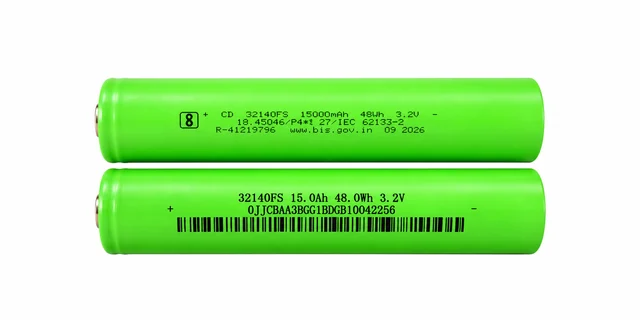
Round cells are used in EV battery packs, including two-wheelers. Cylindrical cells are available in LFP and NMC chemistries. Select by the exact voltage, capacity, discharge current and pack design.
Browse cylindrical ↗Choose the chemistry as well as the shape
LFP · Lithium iron phosphate and NMC · Nickel manganese cobalt describe cell chemistry. Prismatic and cylindrical describe cell shape. Both chemistries can come in either shape. Application suitability depends on the exact cell and complete battery system.
Our catalogue includes cylindrical LFP cells and prismatic LFP cells. Ask Sahas to confirm the chemistry and model for your requirement.
Manufacturer reference — EVE cell formats and chemistries ↗What is the difference between 18650 and 21700 cells?
These names describe approximate cylindrical dimensions. An 18650 is about 18 mm wide and 65 mm long, while a 21700 is about 21 mm wide and 70 mm long. A larger cell will not necessarily fit your holder or meet your current requirement. Check the exact manufacturer drawing and the terminal style.
LFP vs NMC cells: which should you choose?
LFP and NMC are both lithium-ion chemistries. NMC typically offers higher energy density, which can matter when space and weight are limited. LFP is often chosen when cycle life and thermal stability are priorities. Compare actual datasheets under comparable test conditions and match the charger and BMS to the chemistry.
What should you check before buying cells in bulk?
Request the exact model, lot traceability, minimum capacity, continuous discharge current, voltage limits and operating temperature range. Confirm physical tolerances, terminal type and whether the seller can supply samples from the same lot. A high mAh figure does not tell you how much continuous current the cell can deliver.